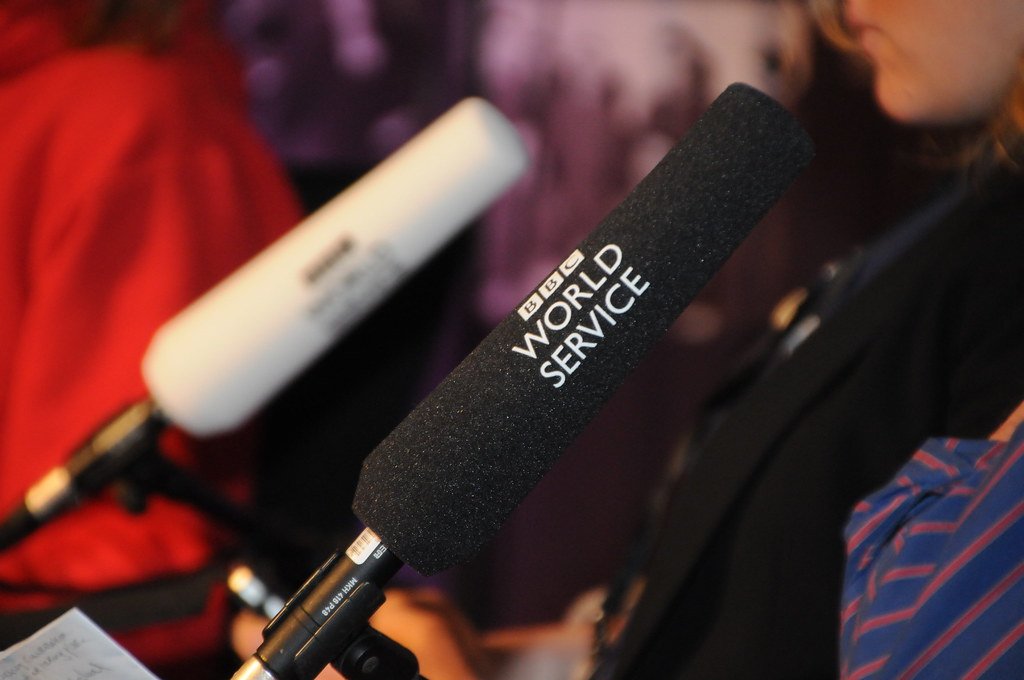
Tim Davie, Director General of the BBC, has issued a stark warning about the global consequences of funding cuts to the BBC World Service, particularly in the face of rising influence from state-funded media outlets in Russia and China. Speaking at the Future Resilience Forum, Davie will highlight how these cuts have opened the door for state-controlled media to spread unchecked propaganda, threatening stability and democracy worldwide.
The Impact of Cuts on Global Media
Since its inception in 1932, the BBC World Service has played a vital role in delivering independent, impartial news to millions around the globe, often serving as a lifeline for reliable information in regions dominated by censorship or state-controlled media. However, recent budget reductions have forced the BBC to scale back its international services, including significant cuts in Africa, the Middle East, and Latin America. In 2022, the corporation announced plans to cut 382 roles from the World Service and shift more content online, aiming to save £28.5 million.
Davie is expected to argue that this retreat has created a vacuum, quickly filled by Russian and Chinese media, who are capitalising on the gaps left by the BBC’s downsizing. In Africa, for example, Russia has ramped up its investment in media, using social media influencers and live-streamed rallies to promote pro-Russian narratives. “When the World Service retreats, state-funded media operators move in to take advantage,” Davie will say, underscoring the seriousness of the issue.
The Rise of Russian and Chinese Media Influence
Russia and China have reportedly increased their media spending in key regions by £6-8 billion, far outstripping the BBC’s budget. This growing influence is not only evident in terms of audience reach but also in the trust these state broadcasters are building in these areas. For instance, in Lebanon, Russian-backed media has taken over the frequency previously used by BBC Arabic, delivering unchallenged narratives to local audiences.
Davie will highlight the importance of maintaining the BBC’s presence in these regions, arguing that the BBC’s impartial reporting plays a crucial role in countering disinformation. “Free and fair reporting has never been more essential for global democracy and for audiences of most need around the world,” Davie will say, pointing to ongoing conflicts such as the war in Ukraine and unrest in the Middle East, where access to truthful news can be a matter of life and death.
The Threat to Democracy
The rise of generative AI is further complicating the landscape, as advances in technology make it easier for fake news and disinformation to spread rapidly. According to Davie, this is happening at a “critical moment” for global stability and democracy. He will describe the current situation as “an all-out assault on truth worldwide,” warning that the retreat of the BBC World Service could have dire consequences.
Without the BBC’s independent voice, audiences in many regions are left vulnerable to the influence of state-backed media outlets, which are often used as tools for soft power by authoritarian regimes. The concern is not just about the BBC’s future but about the broader implications for global democracy and the free flow of information.
A Call for Long-Term Funding
This is not the first time Davie has raised the alarm about the future of the BBC World Service. Earlier this year, he called for a long-term funding solution from the UK government, arguing that the World Service should not rely solely on the UK licence fee, especially when domestic services are also under financial pressure. In April, the International Development Committee launched an inquiry into the future funding of the BBC World Service, following Davie’s call for increased government support.
Davie’s message is clear: without adequate funding, the BBC’s ability to provide impartial, independent journalism to global audiences will be severely compromised, allowing state-controlled media to dominate the narrative. “Had the BBC been able to retain our impartial radio output, these messages would have been much harder for local audiences to find,” he will say, underscoring the importance of the World Service’s presence in regions where access to truthful news is limited.
The BBC World Service has long been a beacon of free and fair reporting, operating in more than 40 languages and reaching a weekly audience of over 364 million people. Its role during times of conflict and crisis has been particularly crucial, providing reliable news to areas where local media is restricted or controlled by authoritarian regimes. From World War II to the present day, the World Service has been a vital source of information for people living under oppressive conditions.
However, the future of the World Service remains uncertain, with the possibility of further cuts on the horizon. The current funding agreement with the Foreign, Commonwealth, and Development Office runs until 2025, after which the future of the service is unclear. In the meantime, the BBC is calling for urgent action to ensure that the World Service can continue to operate and provide a counterbalance to the growing influence of state-backed media outlets from Russia and China.